





Prenatal Vitamin Checklist
Prenatal vitamin ingredients can vary a bit depending on the brand, but most include a combination of minerals and nutrients that support you and your growing baby. So they’re all pretty much the same, right? Not exactly. Before you buy a supplement, ensure you have a checklist of what you’re looking for and what works for your lifestyle. After all, prenatals don’t work if you don’t take them consistently.
So what ingredients should you look for? We’re breaking down what to look for when buying a prenatal supplement.
Why You Need a Prenatal Vitamin (Even with a Healthy Diet)
Many women wonder, “Do I need prenatals if I eat well?” The short answer is yes. Even with a balanced menu rich in fruits, vegetables, and whole grains, the benefits of prenatal vitamins before pregnancy and throughout the perinatal period are well documented.
Preconception
Many people may not know this, but the best time to start taking a prenatal is while you're trying to get pregnant. During preconception, your body’s stores of key nutrients like folate and choline support early fetal development—often before you even know you’re pregnant. Taking a supplement in advance helps build these reserves.
Pregnancy
In pregnancy, your blood volume increases, your baby’s organs and brain develop rapidly, and your need for iron, Docosahexaenoic Acid (DHA), iodine, and other nutrients rises. Food alone often can’t meet these demands, especially if you experience nausea, food aversions, or dietary restrictions such as vegetarian or vegan eating.
Postpartum
In the postpartum stage, you can continue taking prenatal vitamins to help replenish depleted nutrient stores and support recovery and breastfeeding needs. They can be a great addition to a healthy diet to support your recovery.
Core Nutrients to Look For in a Prenatal Vitamin
Below is a brief overview of some of the common nutrients and minerals, their function and the RDA.
|
Nutrient |
Why It Matters |
Recommended Daily Allowance (RDA) |
|
Folate (Methylated) |
Prevents neural tube defects |
600 mcg DFE |
|
Iron |
Supports increased blood volume, prevents anaemia |
27 mg |
|
Choline |
Crucial for the baby’s brain development |
450 mg |
|
DHA (Omega-3) |
Brain, eye, and nervous system development |
200–300 mg |
|
Vitamin D |
Bone, immune support |
600 IU |
|
Iodine |
Brain development and thyroid function |
220 mcg |
|
Calcium |
Promotes baby's bone growth and helps prevent loss from the mother |
1,000 mg |
|
Magnesium |
Reduces cramps and supports sleep |
~350 mg |
|
B12 (Methylcobalamin) |
Energy and red blood cell production |
2.6 mcg |
Commonly Missing Nutrients in Prenatal Vitamins
Not all supplements are created equal; several currently available formulations of prenatal vitamins are missing essential nutrients that expectant parents should be aware of. Knowing what these are can help you decide whether to adjust your diet or add a separate supplement:
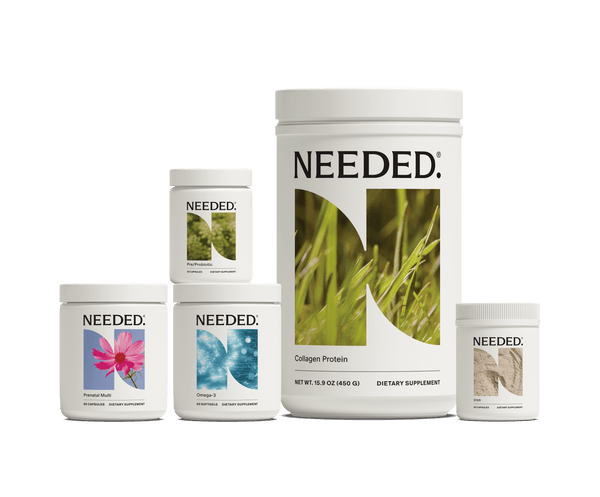
- Choline: Unfortunately, few products offer this vital nutrient that contributes to your baby’s brain and spinal cord development. Needed’s Choline+ is vegan-friendly and easy to add to your daily wellness routine.
- Magnesium: Important for easing muscle cramps, supporting healthy nerve function, and relieving pregnancy-related constipation, insomnia or anxiety.
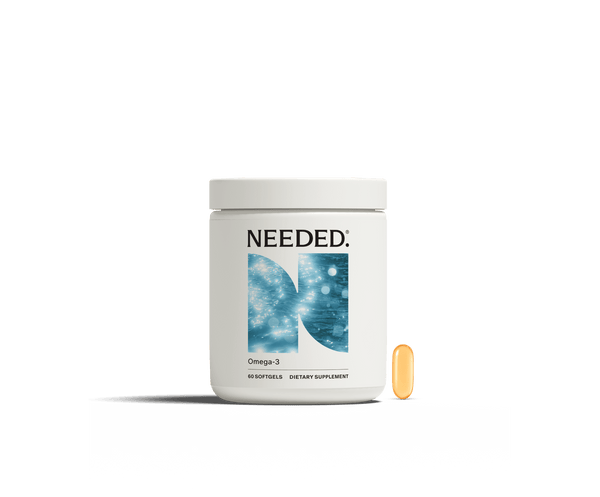
- DHA (Omega-3): Essential for brain and eye development. Look for separate algae- or fish-based DHA if your prenatal doesn’t include it.
- Vitamin K2: Helps you absorb calcium and vitamin D, directing them to the bones instead of soft tissues, supporting stronger skeletal development.
- Iodine: Critical for thyroid and brain development
Understanding these gaps enables you to create a comprehensive prenatal nutrition plan.
When to Start Taking Prenatal Vitamins
A common misconception is that you have to wait until you're pregnant to take a prenatal. You may be surprised to learn that the ideal time to start taking prenatal supplements is actually three months before conception. This gives your body time to build up stores of important nutrients and ensures you’re taking a prenatal in the earliest stages of pregnancy, as many women do not find out they are pregnant for several weeks.
How Your Needs May Change by Trimester
Your nutritional requirements don’t stay the same throughout pregnancy. Over the 40+ weeks, your needs will change as your baby grows and develops.
First Trimester
Here's a quick snapshot of important development milestones and nutrients for your first trimester, AKA conception to 12 weeks:
- Your baby’s neural tube (which becomes the brain and spinal cord) is forming, making folate (or folic acid) crucial.
- Choline also supports brain development.
- For mothers, increasing your iron intake can help build up your stores and support the development of a healthy blood supply.
Second Trimester
During the second trimester, AKA weeks 13-27, there's lots of change and growth for both you and baby:
- Your baby’s skeleton and muscles grow rapidly, and their brain continues to develop. DHA supports brain and eye development.
- Calcium and vitamin D support bone development and help prevent bone loss in mothers
- Magnesium may help ease muscle cramps, and iron requirements continue to increase as your blood volume expands.
Third Trimester
In the final trimester of pregnancy (AKA weeks 28-40 and beyond), your body prepares for labor, and your baby is getting ready to meet you:
- Your baby’s size and weight increase rapidly, the brain and lungs mature, and fat stores build for life outside the womb.
- As this is all happening, you may have more intense heartburn, trouble sleeping, swelling and cramping in the legs
- Adequate protein, magnesium, and B vitamins (along with lots of water!) can help with energy and tissue repair in preparation for birth.
How to Read a Vitamin Label
One way to ensure your prenatal meets your nutritional needs is by carefully reading the label. Below are some quick tips on what to look for, how to interpret amounts, and which red flags to watch out for when comparing products.
What Should Be on the Label
- Look for core nutrients recommended in pregnancy: folate or folic acid (at least 400–600 mcg DFE), iron (~27 mg), vitamin D (~600 IU), iodine (~150–220 mcg), and ideally choline and DHA.
- Confirm the most optimal formulation for each ingredient, such as methylfolate or folic acid, ferrous fumarate or sulfate for iron, and potassium iodide (not kelp) for iodine.
- Make sure the label lists serving size, amount per serving, and % DV for each nutrient.
How to Interpret Dosage
- Remember that the recommended daily values for pregnant women are higher than those for non-pregnant adults, so the amount may look different from your regular multivitamin.
- Your prenatal won't supply 100% of the daily value of every nutrient, and it shouldn't. Your diet should be the primary source for most of your daily nutrition needs, with your prenatal serving as a helper.
Red Flags to Avoid
- Watch for products with retinol (preformed vitamin A) at high doses, as it can cause congenital abnormalities (beta-carotene is safer).
- Be cautious with gummy prenatals; many lack iron and sometimes DHA.
- Look for third-party testing seals (USP or NSF) to ensure quality and accurate labeling.
Frequently Asked Questions
What ingredients should a prenatal vitamin have?
A quality prenatal should include core nutrients like folate or folic acid, iron, vitamin D, calcium, iodine, choline, and DHA, along with B vitamins and vitamin C to support both mother and baby.
Do prenatal vitamins have vitamin D?
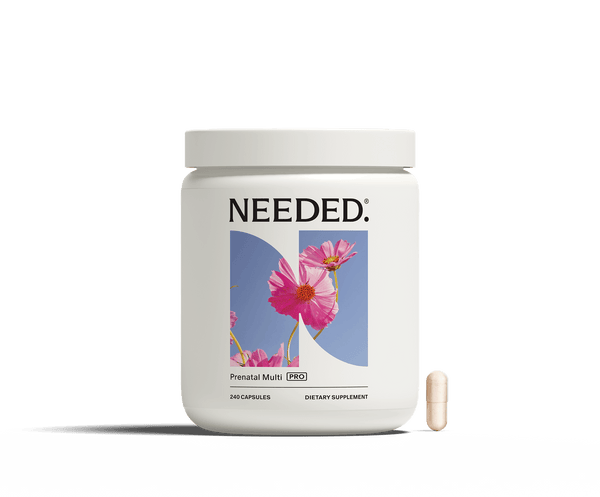
Yes, most prenatal vitamins contain about 600 IU of vitamin D to support bone health and immunity, but it’s worth checking the label since amounts vary by brand. Needed’s Prenatal Multi Powder has 4,000IU of vitamin D3, which is the optimal level for immune response and bone development.
Is folate or folic acid better in prenatals?
Both forms support healthy neural tube development, but some people prefer methylated folate for better absorption, so check your prenatal’s ingredient panel to see which it uses.
Why don’t all prenatals include calcium?
Calcium, as an ingredient, is bulky, so many prenatals provide only part of the daily requirement and expect you to get the rest from food or a separate supplement.
Can I take multiple supplements along with my prenatal?
You can, but always consult your healthcare provider to avoid exceeding safe upper limits for nutrients like vitamin A, iron, or folate.
Can I take prenatals when I’m not pregnant?
Yes, many women take prenatal vitamins before pregnancy to build nutrient stores, but a healthcare professional should still guide long-term use outside pregnancy.
Final Thoughts: Choosing a Prenatal That Works for You
Selecting a prenatal vitamin is about more than just ticking off a checklist of nutrients. The right product combines evidence-backed ingredients and formulations with doses tailored to meet the needs of pregnant people.
Look for transparency on the label, third-party testing, and a formula that matches your diet and needs. With a bit of label literacy and guidance from your healthcare provider, you can choose a prenatal vitamin that truly supports you and your baby.


