








Group B Strep in Pregnancy: What a Positive Test Result Actually Means for You and Your Baby
Getting a positive test for any sort of infection is always daunting, but receiving one during pregnancy is, understandably, terrifying.
You’ve probably never heard of Group B streptococcus (GBS), but almost every pregnant woman receives this test during the third trimester. If you’ve recently received a positive diagnosis, here’s what’s most important right now: it’s common, it’s manageable, and you are not alone. In fact, about 1 in 4 pregnant women will receive a positive result.
There is a clear, well-established plan for keeping your baby safe — and understanding it is the most empowering thing you can do right now.
Here's everything you need to know.
|
Key Takeaways:
|
What is group B strep — and why does it matter in pregnancy?
Group B streptococcus (GBS), scientifically known as Streptococcus agalactiae, is a type of bacterium that naturally lives in the gut and lower genital tract of many healthy adults. It is not the same bacteria that cause strep throat (that's group A strep), it is not an STI, and its presence has nothing to do with hygiene or anything you did or didn't do.
In real-world settings, around 10-30% of pregnant women test positive for Group B Strep.
When a person carries GBS bacteria without showing signs of illness, they are said to be colonized — not infected. For most healthy adults, GBS colonization causes no symptoms and no harm whatsoever.
It’s critical during pregnancy because newborns haven't yet developed the immune defenses to fight off an infection, so there needs to be adequate prenatal screening and a protocol to prevent transmission to the baby during birth.
How and When: Group B Strep Testing
Standard screening for group B strep occurs during the third trimester, at ~36 to 37 weeks of pregnancy, in accordance with guidelines from both the American College of Obstetricians and Gynecologists (ACOG) and the CDC. Why the wait? GBS colonization status can change throughout pregnancy, so earlier swabs don't accurately predict whether you'll carry the bacteria at delivery.
How is Group B Strep Tested?
The test is relatively quick and mostly painless. Your provider uses a soft cotton swab to collect samples from your vagina and rectum. The sample is sent to a lab, and most women receive their results within 24 to 48 hours. If you're receiving care through a midwife, you may be given the option to self-swab at home and submit the sample directly to a lab.
If you go into labor before your scheduled test, your provider will assess your risk based on established clinical factors and make a treatment decision accordingly.
What Happens If You Test Positive
A positive GBS result means the bacteria are present. It does not mean you or your baby will get sick — and with appropriate treatment, the risk of your baby developing a GBS infection is dramatically reduced.
The standard approach is intravenous (IV) antibiotics administered during labor, most commonly penicillin. Timing is key: antibiotics given at least four hours before birth are highly effective at clearing the bacteria from the birth canal before the baby passes through. This approach reduces the risk of early-onset GBS disease in newborns by approximately 80%.
What to Know About A GBS-Positive Labor
If you’ve found out you're GBS positive, you’ll need to discuss a birth plan with your provider in advance. Below are a few things to keep in mind:
- Penicillin allergy: Tell your provider. Alternative antibiotics are available, and your care team will choose the most appropriate option based on the nature of your allergy and the results of any sensitivity testing.
- Planning a C-section: If your cesarean is scheduled, your labor hasn't started, and your membranes are still intact, you may not need GBS-specific antibiotics — though your provider will advise based on your individual circumstances.
- Positive in a previous pregnancy: A prior positive result places you in a higher-risk category and may mean you'll receive antibiotics regardless of this pregnancy's test result. Importantly, a positive result in one pregnancy does not guarantee you'll be positive in the next, and vice versa —so you’ll need a new test with each pregnancy.
This is also a good time to revisit your overall birth plan with your provider and make any necessary changes. Being GBS-positive doesn't mean you don’t have options–you can still choose a water birth or deliver at a birthing center. You just need to discuss timing, monitoring and expectations.
GBS & The Risks to Your Baby
Let's talk honestly about the risks of a GBS positive test for your baby, the well-established safeguards, and your options.
Babies are most commonly exposed to GBS during labor and delivery: either as they pass through the birth canal or when bacteria travel upward after the membranes rupture. There is also evidence that GBS can, in some cases, cross intact membranes earlier in pregnancy, which is associated with a small increased risk of preterm birth.
There are two forms of GBS disease in newborns:
- Early-onset GBS develops within the first 24 to 48 hours up to the first week after birth and can cause sepsis, pneumonia or meningitis. It is the more common of the two types, but also the type that intrapartum antibiotics are specifically designed to prevent.
- Late-onset GBS is less common and appears between one week and three months after birth and is not prevented by antibiotics given during labor. Can commonly cause meningitis.
Symptoms of GBS Infection in Newborns
Some symptoms include:
- Breathing difficulties
- Lethargy or irritability
- Poor feeding habits
- Inability to regulate body temperature
- In more serious cases, seizures
Most affected babies show signs within the first few hours. If you notice any of these symptoms after birth, contact your care team immediately.
Premature Babies & GBS
Premature babies carry a higher risk because their immune systems are less developed. If your water breaks more than 18 hours before delivery, your baby's risk of exposure also increases, and your provider will take this into account in their treatment approach.
But the current protocol works to reduce these risks: universal screening combined with intrapartum antibiotics has reduced early-onset GBS disease rates in the United States from 1.7 cases per 1,000 live births in 1993 to 0.2 cases per 1,000 live births today, according to the CDC.
The Importance of Gut & Immune Health in the Third Trimester
While no dietary change or supplement has been shown to prevent or treat group B strep colonization, it’s always a good idea to give your body adequate nutritional support, especially during the third trimester.
A well-nourished immune system and a diverse, balanced gut microbiome are foundational to overall wellness during pregnancy — for you and, increasingly, for your baby's developing microbiome.
Vitamin D
Vitamin D plays an important role in supporting healthy immune function. Many pregnant women have suboptimal vitamin D levels, particularly heading into the winter months or if sun exposure is limited. A quality prenatal supplement that includes vitamin D can help maintain healthy levels throughout the third trimester.
Omega-3 Fatty Acids
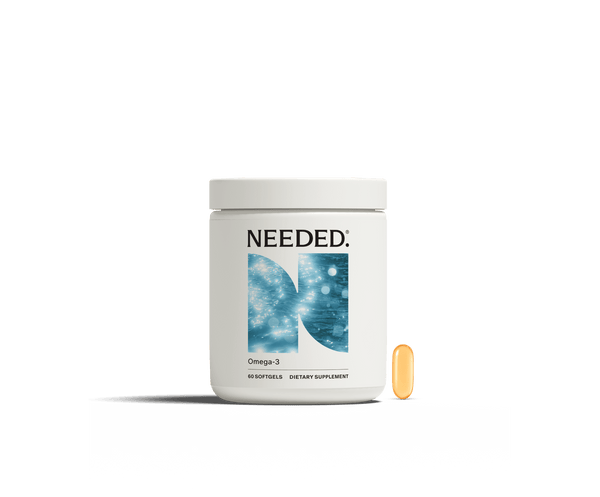
Omega-3 fatty acids, particularly DHA, contribute to a healthy inflammatory response during pregnancy and support fetal brain and eye development. They are widely under-consumed in the standard diet, making supplementation particularly relevant. Needed’s Prenatal Omega-3 supplement contains 1,000 mg of DHA+EPA, optimized for your baby’s development.
Probiotics
Probiotics are a growing area of perinatal research. The science is still evolving, but there is emerging evidence that certain probiotic strains may contribute to a healthy vaginal microbiome during pregnancy. This is an area worth discussing with your midwife or registered dietitian, who can help you identify strains and formulations appropriate for your specific needs.
Zinc & Vitamin C
Zinc and vitamin C are both nutrients that contribute to the normal function of the immune system, and both are commonly depleted during pregnancy as your body prioritizes your growing baby.
None of these replace the evidence-based antibiotic protocol for GBS management. replaces the antibiotic protocol for GBS management. Nutritional support helps support your body’s entire ecosystem during a demanding period. It isn’t an intervention for a specific condition, but as part of what it means to nourish yourself and your baby well. Always speak with your provider before starting any new supplements or vitamins.
Frequently asked questions
Can I have a natural birth if I test positive for group B strep?
Yes. Testing positive for GBS does not automatically remove any birth options from the table. The primary change to your birth plan is the addition of IV antibiotics during labor, which usually require intermittent monitoring. Many women can still move freely and have their intended birth experience–with the appropriate adjustments.
Talk through the specifics with your midwife or OB well in advance so you understand exactly what to expect and can plan around it.
Does group B strep go away on its own during pregnancy?
GBS colonization can fluctuate — some women test positive at one point in pregnancy and negative at another, and vice versa. This is precisely why testing is done at 36-37 weeks rather than earlier, to get the most accurate picture of your status at the time most relevant to delivery. There is no recommended treatment to "clear" GBS during pregnancy itself; the focus is on managing it during labor.
I was GBS positive in my last pregnancy. Will I be positive again?
Not necessarily. Colonization status can change between pregnancies. However, a prior positive result is a known risk factor, so current guidelines recommend a heightened protocol, including intrapartum antibiotics, regardless of the result.
What should I watch for in my newborn after a GBS-positive birth?
Most babies who receive the appropriate antibiotic treatment will be healthy. However, you should still have awareness of GBS disease symptoms in newborns, such as grunting, rapid or labored breathing, unusual limpness or lethargy, poor feeding, fever or abnormally low temperature, and, in serious cases, seizures.
Most symptoms of early-onset GBS appear within the first few hours of life. If anything concerns you, trust your instincts and contact your care team immediately.
Can probiotics or diet help with group B strep in pregnancy?
There’s no clinical evidence that supplements or dietary changes can prevent or treat GBS colonization. Good nutrition can support immune and gut health, but it’s not a proven treatment. If you're curious about nutritional support during this stage of pregnancy, a registered dietitian with perinatal experience is your best resource for personalized guidance.
Sources
- Group B Streptococcus and Pregnancy - StatPearls - NCBI Bookshelf
- Group B Streptococcus (GBS)
- Group B Strep and Pregnancy | ACOG
- Prevention of Group B Streptococcal Early-Onset Disease in Newborns | ACOG
- Screening for Group B Strep Bacteria
- Myth: Group B streptococcal infection in pregnancy: Comprehended and conquered - ScienceDirect
- Recurrent group B streptococcus infection in an extremely premature infant: as a preterm neonate, infant and toddler - PMC
- Group B Strep Surveillance and Trends
- Effect of vaginal probiotics containing Lactobacillus casei rhamnosus (Lcr regenerans) on vaginal dysbiotic microbiota and pregnancy outcome, prospective, randomized study | Scientific Reports


