










When does perimenopause start: stages, timeline, and how long it lasts
Nobody hands you a memo when perimenopause begins. There's no test that turns positive, no clear starting line. The symptoms can creep up on you—a shift in your sleep, a shorter fuse, your cycle doing something new. For many women, the slow realization that something is shifting comes long before perimenopause even enters the conversation.
Perimenopause is one of the most significant hormonal transitions of a woman's life, and yet most of us enter it with almost no roadmap. In this article, we're breaking down when perimenopause typically starts, how it progresses through its stages, how long it tends to last, and what the early signs look like—including the subtle ones that are easy to chalk up to stress or a rough season of life.
|
Key takeaways
|
What is perimenopause?
Perimenopause and menopause are not the same thing. Menopause is a single moment in time—the point at which you've gone 12 consecutive months without a period, signaling that your ovaries have stopped releasing eggs. Perimenopause is the transition, often lasting several years, that leads up to that point. Many of us have heard the phrase "going through menopause," but it's during perimenopause—not menopause itself—that most of the classic symptoms occur.
During perimenopause, your ovaries gradually produce less estrogen and progesterone. But this isn't a smooth, steady decline. Instead, hormones fluctuate unpredictably from month to month, which is why symptoms can feel inconsistent and confusing. One cycle, you might feel fine. Next, you're waking up drenched in sweat. The general trend is downward, but the ride can be bumpy.
When does perimenopause typically start?
Perimenopause typically begins in the mid-40s, but the range is broader than most people expect. The average age of menopause in the United States is 51–52 years (Cleveland Clinic), which means perimenopause often starts 4–10 years earlier. That puts many women starting the transition in their early-to-mid 40s. However, it can begin as early as the mid-to-late 30s for some women, and age alone is not the only predictor of when perimenopause will start.
Genetics—more than any lifestyle factor—is the strongest driver of timing. Your mother's age at menopause is one of the strongest indicators of your own timeline. That said, factors like smoking, certain autoimmune conditions, and cancer treatments can influence when the transition begins. Even women with identical risk profiles can have different timelines.
And here's what matters most: age alone doesn't tell the whole story. Some women sail through their 40s with no noticeable symptoms, while others experience significant changes years earlier.
Can perimenopause start in your 30s?
Yes. While less common than starting in your 40s, symptoms beginning in the mid-to-late 30s aren't rare. Irregular cycles, mood shifts, sleep disruption, and energy changes can all be early signs, even in women who aren't yet thinking about menopause. Many women are having babies later in life, and the transition from pregnancy and breastfeeding right into perimenopause can feel especially surprising.
But there's an important distinction to make. Early perimenopause—hormonal changes before age 40 that are part of the natural transition—is different from premature ovarian insufficiency (POI). Approximately 1 in 100 women will experience menopause before age 40, classified as POI rather than typical perimenopause. POI involves more significant hormonal disruption and fertility implications beyond standard perimenopause symptoms.
If you're in your 30s and noticing potential symptoms, it's worth talking with your healthcare provider. Other conditions—like thyroid disorders, polycystic ovary syndrome (PCOS), and high stress—can mimic perimenopause symptoms. A proper evaluation helps identify what's going on and rules out other causes before assuming the transition has begun.
The stages of perimenopause
Perimenopause unfolds in stages as hormones shift and change. The most widely used clinical framework is the STRAW+10 system (Stages of Reproductive Aging Workshop), which divides the transition into early and late perimenopause, each with distinct hormonal and symptom patterns.
Early perimenopause
In early perimenopause, hormones are fluctuating but haven't dropped dramatically. Cycle changes are subtle—perhaps a slightly shorter cycle or a bit more PMS than usual. Many women feel mostly normal at this stage. Hot flashes, if they occur at all, tend to be mild and may happen only during certain points in the cycle. This stage can last several years.
Late perimenopause
Late perimenopause brings more obvious cycle irregularities—periods that go missing for a few months, or that vary wildly in flow. Vasomotor symptoms like hot flashes and night sweats become more common and intense. Sleep disruption, mood changes, and brain fog tend to be more significant. The final year before menopause (often called the final menopausal transition) is frequently the most symptomatic, as estrogen and progesterone reach their lowest levels.
You won't know you're in the final year until you've completed it. Once you've counted 12 consecutive months without a period, you've reached menopause.
How long does perimenopause last?
On average, perimenopause lasts between 4 and 8 years, though it can be shorter or longer depending on genetics, lifestyle, and health history. Some women move through the transition in a few years, while others experience symptoms for over a decade. The variation is real, and it's normal (Cleveland Clinic).
Several factors may influence how long the transition lasts:
- Age at onset: Women who enter perimenopause earlier may experience a longer overall transition.
- Genetics: Family history of earlier or later menopause often correlates with the length of the transition.
- Vasomotor symptom history: Research suggests women who experience hot flashes earlier may have a longer overall perimenopause duration.
- Health and lifestyle: Chronic stress and other health factors may influence the pace of the transition.
The transition officially ends at menopause, defined as 12 consecutive months without a period. Many symptoms, including hot flashes and sleep disruption, can persist into early postmenopause, but they often diminish over time as hormones stabilize.
Early signs of perimenopause
One of the trickier aspects of perimenopause is that symptoms don't always follow a predictable script. Cycle changes can be absent entirely in the early stages, and mood shifts, sleep problems, and anxiety may appear months or even years before any noticeable change in your period.
Menstrual cycle changes
Changes to your cycle are among the most recognized signs of perimenopause. Watch for:
- Cycles becoming shorter or longer than your personal baseline
- Flow that is heavier or lighter than usual
- Skipped periods or longer gaps between cycles
- Spotting between periods
Hot flashes and night sweats
Hot flashes and night sweats are known as "vasomotor symptoms." About 75–80% of women experience them during perimenopause (UCLA Health). A hot flash is a sudden wave of heat, often starting in the chest or face, sometimes followed by chills or cold sweats. Night sweats are the nighttime equivalent—intense sweating during sleep that disrupts rest.
Vasomotor symptoms can begin years before menstrual irregularities and often become more frequent and intense as the transition progresses.
Mood, sleep, and cognitive changes
These are often the symptoms women notice first. Because this life stage is typically busy with growing children, aging parents, and demanding careers, these symptoms are often shrugged off as external stressors. Sometimes they are, but perimenopause often plays a significant role.
- Mood shifts: Irritability, anxiety, low mood, or even rage that feels out of proportion to circumstances
- Sleep disruption: Difficulty falling asleep, waking frequently through the night, or waking too early
- Brain fog: Difficulty concentrating, struggles finding words, forgetfulness that feels new or alarming
- Fatigue: Persistent tiredness that sleep doesn't fully resolve
- Women with a history of depression, anxiety, or premenstrual mood changes may be at higher risk for experiencing these symptoms during perimenopause. The hormonal fluctuations can amplify pre-existing sensitivities.
Other early signs
Vaginal dryness or changes in libido. Joint achiness or changes in body composition. Heart palpitations linked to estrogen fluctuations. Headaches that appear around your cycle or more frequently than before. These subtler signs are frequently overlooked or attributed to other causes. Tracking your symptoms alongside your cycle for a few months can help you and your provider identify patterns.
Hormonal testing and when it helps
One of the most frustrating aspects of perimenopause is that there's no single definitive test to confirm it. Unlike pregnancy, which can be confirmed with a simple test, perimenopause is largely a clinical diagnosis based on symptoms, age, and menstrual pattern.
That said, certain hormone tests can provide useful context. FSH (Follicle-Stimulating Hormone) rises as your ovaries become less responsive to hormonal signals, suggesting the transition has begun. However, FSH fluctuates significantly during perimenopause, so a single elevated reading isn't diagnostic. Estradiol fluctuates dramatically during this stage, with levels spiking and dropping unpredictably. A snapshot in time provides limited information.
The bottom line: hormone levels must be interpreted alongside symptoms, menstrual history, and age. If you're experiencing symptoms that concern you, focus that conversation with your provider on what you're experiencing, not what a blood test shows.
Nutrition support through perimenopause
The hormonal changes of perimenopause affect more than how you feel day to day. They have real implications for long-term health, including bone density and cardiovascular function. Nutrition choices can make a meaningful difference in how your body ages throughout perimenopause and beyond.
Early perimenopause
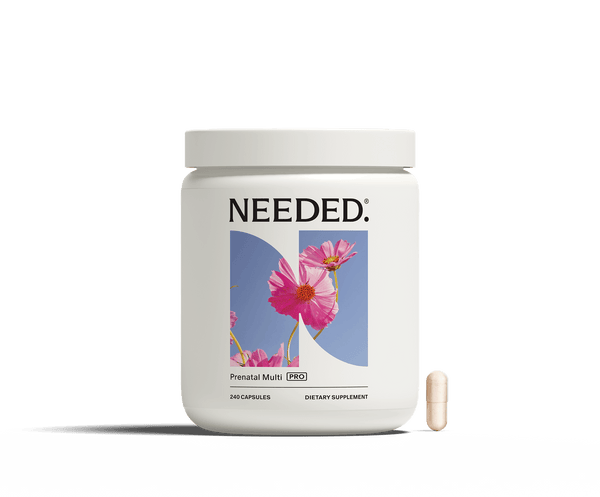
In the early stages, when hormones are fluctuating but haven't dropped dramatically, focus on foundational nutritional support. A high-quality multivitamin designed for this life stage can help fill nutrient gaps common in midlife women. Look for adequate B vitamins for energy metabolism, vitamin D and magnesium for mood and sleep support, and antioxidants for cellular health.
Late perimenopause
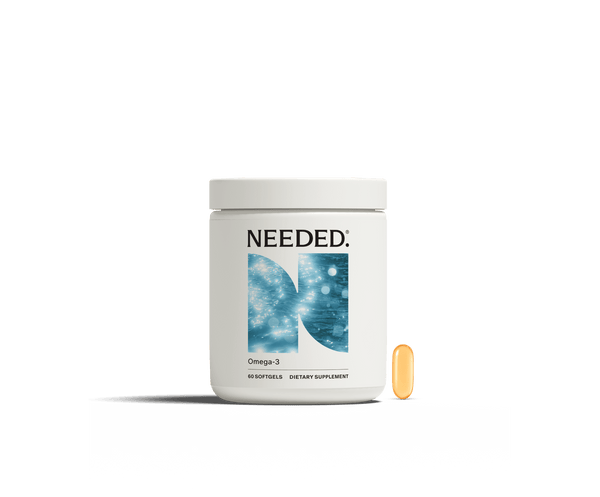
As estrogen levels drop more significantly, two health priorities sharpen: bone density and cardiovascular health. Estrogen plays a protective role in both, and as it declines, additional nutritional support becomes more important. Calcium and vitamin D work together to support bone mineralization. Magnesium supports bone structure and sleep function. Omega-3 fatty acids have been studied for their role in cardiovascular health and may help modulate inflammation and mood.
Explore the full range of the Needed perimenopause collection, formulated to meet the specific needs of women in this transition. If you have significant sleep disruption, we formulated Sleep Support to support restful sleep during times of hormonal change. If stress feels like a constant companion, Stress Support may help support your body's cortisol response.
Frequently asked questions
What is the earliest age perimenopause can start?
Perimenopause can begin in the mid-to-late 30s for some women, though it more commonly starts in the early-to-mid 40s. Women who experience menopause before age 40 are diagnosed with premature ovarian insufficiency (POI), a distinct condition that warrants specific medical care.
How do I know if I'm starting perimenopause?
Changes in your menstrual cycle, mood, sleep, or energy can all be signs. Because symptoms vary widely and can be caused by other conditions, it's worth tracking what you're experiencing over a few months and discussing it with your provider.
Can symptoms start before cycle changes?
Yes. For many women, mood changes, sleep disruption, brain fog, and anxiety appear before any noticeable shift in their period. Since these symptoms overlap with other life stressors, they're easy to attribute to other causes.
Does stress influence perimenopause timing?
Stress doesn't cause perimenopause, but some research suggests chronic psychological stress may influence the timing or intensity of the transition. Genetics and ovarian aging remain the primary drivers of its timing.
The bottom line
Perimenopause doesn't always start with hot flashes or dramatic cycle changes. It often begins quietly—in the quality of your sleep, the edge in your mood, the way your energy doesn't bounce back the way it used to.
It can feel frustrating and disorienting. What helps is knowing what you're dealing with. When you can name what's happening in your body and why, it becomes much easier to stop second-guessing yourself and start supporting yourself.
Support can come from talking to your provider, tracking your symptoms, or paying more attention to the nutrients your body needs. If you're looking for a place to start, the Needed perimenopause collection is built for exactly this life stage.
Sources
- Perimenopause: Age, stages, signs, symptoms & treatment (Cleveland Clinic, 2024)
- Up to 14 years of hot flashes found in menopause study (Study of Women's Health Across the Nation)
- Hot flashes and more: new program helps patients through (UCLA Health)
- Management of the perimenopause (PMC - NIH, 2018)
- Perimenopause: From research to practice (PMC - NIH, 2015)
- Perimenopause: Rocky road to menopause (Harvard Health)
- The menopause years (American College of Obstetricians and Gynecologists)
-
Menopause basics (Office on Women's Health)


