












Irregular periods during perimenopause: what's normal
If your cycle has started behaving unpredictably, you're not imagining it. For many women in their late 30s and 40s, this kind of chaos can be an early signal that perimenopause has begun. And if you've spent the last two decades with a reliable rhythm, the shift can feel disorienting.
The truth: most of what you're experiencing is a completely normal part of reproductive aging. Your body isn't failing you. It's recalibrating. Understanding what's happening hormonally—and which changes deserve a conversation with your doctor—can transform perimenopause from something that feels like a loss of control into something you can prepare for.
This article breaks down why your periods are changing, which cycle shifts are expected (and which warrant evaluation), and how to support your body nutritionally through this transition.
|
Key takeaways
|
What is perimenopause, and why it affects your periods
Perimenopause is the transitional period leading up to menopause, when ovarian hormone production becomes less predictable. This typically shows up first as irregular periods—cycles that are suddenly shorter or longer than your baseline, heavier or lighter, or occasionally skipped altogether.
The driver: ovarian aging. Your ovaries contain a finite number of follicles, and as you move through your reproductive years, both the quantity and quality of these follicles decline. This fundamental shift changes how much estrogen and progesterone your ovaries produce and, more importantly, when they produce them.
As follicles become less responsive, early-cycle follicle-stimulating hormone (FSH) rises while anti-Müllerian hormone (AMH) declines. One pattern that surprises many women: estradiol doesn't decline in a straight line during perimenopause. Instead, it becomes erratic. Your estrogen can swing significantly—sometimes higher or lower than in your reproductive years—and levels can change from day to day.
This hormonal instability makes ovulation less predictable. In some cycles, you ovulate normally. In others, no egg is released at all. Your body often can't signal which is which. Research using the STRAW+10 staging system shows that cycles with normal ovulation remain common until roughly five years before your final menstrual period, then drop sharply. By the year before menopause, only about one in four cycles shows typical ovulatory patterns.
Common period changes and what they mean
Irregular periods during perimenopause can take many forms. For most women in their 40s, some combination of these changes is completely expected as hormone production becomes less predictable. Let's break down the most common patterns.
Shorter or longer cycles
One of the earliest signs of perimenopause is a persistent shift of 7 or more days between your usual cycle length and at least two consecutive cycles. If your long-standing 28-day cycle suddenly becomes 21 days—or 35 days—for two months running, perimenopause is likely the explanation.
On average, this early transition stage begins 6 to 8 years before your final menstrual period. But timing varies significantly from woman to woman, and that variability is completely normal.
Heavier periods
Because ovulation becomes less consistent, your body may still produce estrogen, but without adequate progesterone to balance it. When progesterone is low, the uterine lining can grow thicker, which may lead to heavier or longer bleeding.
Heavy periods affect your quality of life—and they shouldn't be ignored. Heavy menstrual bleeding is a leading cause of iron deficiency in women. Research from the NIH Office of Dietary Supplements notes that women with heavy menstrual bleeding lose more iron per cycle and are at significantly higher risk of iron deficiency and anemia than women with typical flow.
Lighter periods or spotting
Not all women experience heavier periods. Some notice lighter flow, shorter bleeds, or intermittent spotting instead. Both patterns reflect the same underlying cause: inconsistent ovulation and hormone shifts.
Skipped periods
Skipping a period (or several) and then having bleeding return is common in later perimenopause as ovulation becomes infrequent. It can feel alarming, but it's a predictable part of the transition. Keep in mind: menopause itself is defined as 12 consecutive months with no bleeding.
When irregular periods warrant medical evaluation
Many cycle shifts in your 40s and early 50s are expected. Increasing variability in cycle length, occasional skipped cycles, or changes from heavier to lighter flow are all normal perimenopause period changes.
But some bleeding patterns deserve professional evaluation:
- Bleeding that soaks through a pad or tampon every hour for several hours in a row
- Periods lasting longer than 8 to 10 days
- Bleeding between periods or after sex
- Any new bleeding after 12 months without a period
These patterns can signal conditions like fibroids, polyps, or bleeding disorders that deserve attention. A large clinical review found that up to 30% of women with heavy menstrual bleeding have iron deficiency, and many have iron-deficiency anemia. If you bring these concerns to your doctor, they'll likely recommend:
- A complete blood count and ferritin testing to assess iron status
- FSH testing (elevated levels suggest stronger ovarian aging)
- Thyroid function tests (an underactive or overactive thyroid can mimic perimenopause symptoms)
- Estradiol levels (though keep in mind these fluctuate so much that a single reading has limited value)
Understanding what's being tested and why gives you real agency in this transition. Don't hesitate to ask questions.
How long does perimenopause last
Perimenopause is a span of time, not a single year. The early menopausal transition (marked by variable cycle lengths) can last several years, followed by a late transition stage with longer gaps between periods before your final menstrual period.
And here's the challenging part: irregular periods alone can't tell you how close you are to the end. Hormone patterns and cycle lengths vary so widely from woman to woman that trying to predict your timeline often leads to frustration.
Some women move from their first noticeable cycle changes to their final period in a few years. Others spend much longer in early perimenopause. Both experiences are completely normal. Try to reframe perimenopause as a multi-year recalibration of your hormonal system rather than a countdown to a specific date.
Track your cycles, nourish your body
Cycle tracking for clarity
If you aren't tracking your cycles, perimenopause is the time to start. Even when your cycle feels unpredictable, tracking offers real value. Research emphasizes that careful bleeding records are key to guiding decisions about evaluation and management.
Consider logging:
- Start and end dates of each bleed
- Approximate flow (light, moderate, heavy) and presence of clots
- Days of spotting
- Symptoms like sleep changes, mood shifts, headaches, or breast tenderness
Bringing this information to your clinician helps distinguish expected perimenopause changes from bleeding that might signal fibroids, polyps, or other conditions. Apps like the built-in Health app on Apple devices can simplify the process.
Nutrition to support this life stage
Nutrition is a powerful tool during perimenopause. While it's not a replacement for medical care, this formula is designed to support energy, cycle comfort, and overall resilience as your hormones shift.
Iron: supporting healthy blood during heavy periods
If your periods have become heavier or more frequent, iron becomes a priority. Research from the NIH Office of Dietary Supplements notes that women with heavy menstrual bleeding lose significantly more iron per cycle. Roughly 30% have iron deficiency, and 60% experience iron-deficiency anemia when tested.
Heavy menstrual bleeding contributes to fatigue, reduced exercise tolerance, and lower quality of life. If your blood work confirms low iron stores, focus on both dietary approaches—heme iron sources like red meat and poultry—and, if recommended by your clinician, supplementation. Our iron supplement is formulated specifically to support women during heavy flow.
B vitamins for energy metabolism
B vitamins (including thiamin, riboflavin, B6, and B12) serve as coenzymes in the body's core energy-producing pathways. They help your cells metabolize carbohydrates, fats, and proteins into usable energy. Research shows that B-complex supplementation supports exercise capacity and reduces markers of fatigue.
Magnesium for cycle comfort
Magnesium participates in hundreds of enzymatic reactions, especially those involved in muscle and nerve function. Clinical studies of women with menstrual pain found that 200 mg of magnesium daily for three cycles significantly reduced pain and lowered the need for additional pain medication.
While these studies focused on younger women, they suggest magnesium may support cycle comfort throughout your reproductive years. Magnesium glycinate tends to be better tolerated and absorbed than oxide forms.
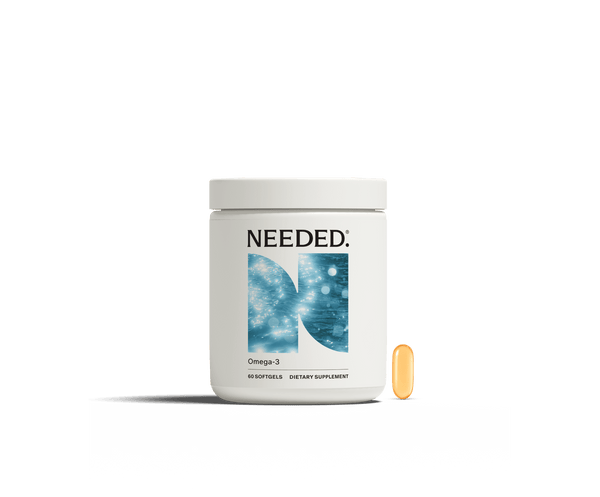
Omega-3 fatty acids for long-term health
Omega-3s, found in oily fish, walnuts, flaxseed, and supplements, are structural components of every cell and support heart and brain health. As cardiovascular risk increases after menopause, consistent omega-3 intake is a reasonable goal at this life stage.
While omega-3s are sometimes suggested for hot flashes, research shows they don't reduce vasomotor symptoms more than a placebo. That doesn't make them less valuable—it means they're better framed as a long-term investment in overall health than a quick fix for specific symptoms.
Our Perimenopause Multi and Women's Omega-3 are formulated with exactly this life stage in mind, delivering bioavailable forms at doses designed to support energy, hormonal balance, and overall health. For a comprehensive look at supplements during perimenopause, explore our guide to perimenopause supplements.
Frequently asked questions
Can you still get pregnant with irregular periods during perimenopause?
Yes. Even with irregular cycles, ovulation can still occur, and pregnancy remains possible until 12 consecutive months without a period have passed. Because ovulation becomes less predictable, it's important to continue contraception if you want to avoid pregnancy. Talk to your doctor about which method makes the most sense for this stage of your life.
How do I know if irregular periods are perimenopause or something else?
Age and pattern matter. In women in their 40s or early 50s, increasingly variable cycle lengths alongside other symptoms like hot flashes or sleep changes strongly suggest perimenopause. However, thyroid disorders, fibroids, polyps, bleeding disorders, or medications can cause similar patterns. Guidelines recommend evaluation anytime bleeding is heavy, prolonged, occurs between periods, or begins after 12 months without a period. When in doubt, a conversation with your doctor is the right call.
Do irregular periods mean menopause is close?
Irregular periods indicate you're somewhere on the perimenopause spectrum, but they don't provide a countdown to your final menstrual period. Some women transition from first cycle changes to their last period in a couple of years; others spend much longer in early perimenopause. Your experience is normal regardless of where you fall on that timeline.
What's the difference between perimenopause and menopause?
Perimenopause is the transition period before menopause, characterized by hormonal fluctuations and irregular periods. Menopause itself is a single point in time: when you've gone 12 consecutive months without a period. After that, you're postmenopausal. Understanding this distinction helps you recognize that the irregular period years are temporary, even though they can feel long.
The takeaway
Irregular periods don't come with a universal timeline or a standard set of symptoms. This life stage looks different for every woman, and that variability is completely normal.
The most empowering thing you can do is shift from feeling like your body is failing you to treating perimenopause as something you can actively prepare for. Track your cycles. Understand your individual pattern. Nourish your body with the nutrients it needs at this specific life stage. And don't hesitate to bring your questions to a clinician you trust.
The more you understand this transition, the more agency you'll feel moving through it. And the sooner you'll find your way confidently into this next chapter.


