






Short answer: While you're breastfeeding, most women should keep taking a prenatal or postnatal multivitamin. Your needs for several nutrients go up compared with pregnancy: iodine (290 mcg a day), choline (550 mg a day), vitamin A (1,300 mcg RAE) and vitamin B12 (2.8 mcg). Your iron need drops to 9 mg a day as long as your period hasn't returned. Experts also advise at least 200 mg of DHA a day from seafood or a supplement. Vitamin D stays at 600 IU for you, and breastfed babies usually need their own vitamin D drops.
No vitamin is proven to increase milk supply; if supply is your concern, talk to your healthcare practitioner or a lactation consultant.
- Your prenatal is a reasonable base while you nurse — keep taking it unless your healthcare practitioner says otherwise and check its label for iodine, choline and DHA, which many prenatals are low on.
- DHA and choline are the gaps most multivitamins leave — fill them with food first (fish, eggs), then a supplement if your diet falls short.
- Iron needs fall after birth — don't keep adding high-dose iron unless a blood test shows you need it.
Needs listed are for women ages 19–50. Teens' needs differ.
Which nutrients matter more while breastfeeding?
Breastfeeding raises your daily needs for iodine, choline, vitamin A and vitamin B12 above pregnancy levels, while your needs for iron and folate fall. The CDC notes that because needs for nutrients like iodine and choline rise during lactation, diet alone may not cover them.
|
Nutrient |
Daily target while breastfeeding |
During pregnancy |
What it does |
|
Iodine |
290 mcg (RDA) |
220 mcg |
Needed to make thyroid hormones, which support normal brain development* |
|
Choline |
550 mg (Adequate Intake) |
450 mg |
Supports normal brain development and liver function* |
|
Vitamin A |
1,300 mcg RAE (RDA) |
770 mcg RAE |
Supports normal vision and immune function* |
|
Vitamin B12 |
2.8 mcg (RDA) |
2.6 mcg |
Supports red blood cell formation and nervous system function* |
|
Folate |
500 mcg DFE (RDA) |
600 mcg DFE |
Supports normal cell division* |
|
Iron |
9 mg (RDA), if your period hasn't returned |
27 mg |
Helps carry oxygen in your blood* |
|
Vitamin D |
600 IU (RDA) |
600 IU |
Helps your body absorb calcium for healthy bones* |
|
DHA (omega-3) |
At least 200 mg (expert consensus; no US RDA) |
At least 200 mg |
A building block of the brain and eyes* |
|
Calcium |
1,000 mg (RDA) |
1,000 mg |
Supports healthy bones and teeth* |
Needs are for ages 19–50; teens' needs differ. Sources: NIH Office of Dietary Supplements fact sheets; DHA from the perinatal lipid consensus (Koletzko et al., 2008).
Two notes on Vitamins A and B12: Vitamin A from retinol (preformed vitamin A) has an upper limit of 3,000 mcg a day, so skip high-dose retinol supplements. Women who eat no animal products need a reliable B12 source, since low maternal B12 can reduce B12 in breast milk.
Can I keep taking my prenatal while breastfeeding?
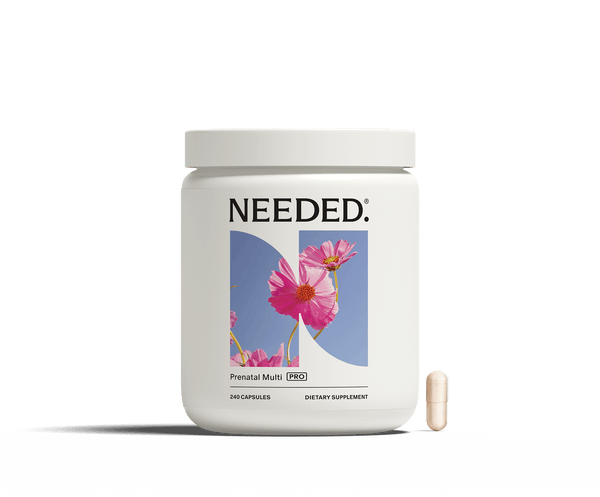
Yes. For most women, the nutrients in a prenatal will help cover breastfeeding needs because it was designed for a time of high nutrient demand. The catch is that many prenatals are formulated with pregnancy in mind, so check the label for the nutrients with higher demands while breastfeeding, such as iodine (look for about 150 mcg), choline and DHA.
If your prenatal is high in iron and your healthcare practitioner hasn't told you to keep it, ask whether a lower-iron or iron-free formula fits you better now.
For a full comparison, see prenatal vs. postnatal vitamins. For a month-by-month plan for the first year, see our guide to postpartum supplements. To understand why nursing raises your needs, read why you need a postnatal vitamin while breastfeeding.
DHA while breastfeeding
DHA is an omega-3 fat that passes into breast milk, and the amount in your milk tracks how much you eat. An international perinatal consensus advises breastfeeding women to average at least 200 mg of DHA a day. In a lactation trial, mothers who took DHA had higher DHA levels in their milk than those who didn't.
- Take a food-first approach to DHA. Both the FDA and EPA advise breastfeeding women to eat 8 to 12 ounces a week of low-mercury fish from their "Best Choices" list, such as salmon, sardines, anchovies and trout. Skip the "Choices to Avoid" fish, which are higher in mercury.
- If you don't eat fish most weeks, a fish-oil or algae-based omega-3 supplement can help you reach your DHA target. Many prenatal multivitamins don't contain DHA, so check your label.
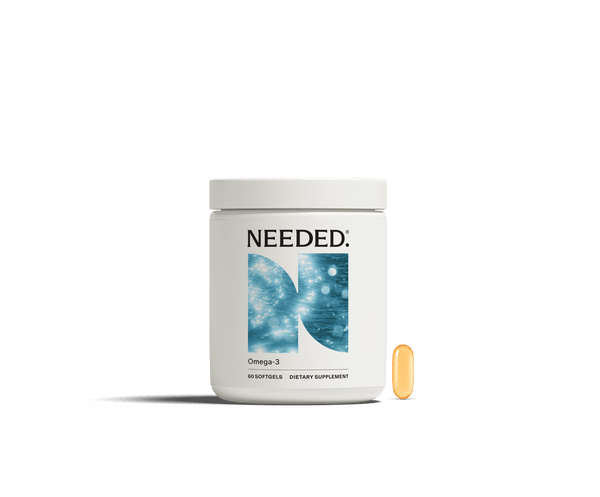
- DHA supports normal brain and eye development.* Needed Prenatal Omega-3 provides 500 mg DHA and 500 mg EPA per 2 softgels, from sustainably sourced fish oil. A vegan, algae-based option provides 500 mg DHA + EPA combined per 2 capsules.
Vitamin D: you and your baby
Your own vitamin D target doesn't change while breastfeeding: it stays at 600 IU a day, with an upper limit of 4,000 IU a day from all sources unless your healthcare practitioner directs otherwise.
Your baby has separate needs. Breast milk is naturally low in vitamin D, so the American Academy of Pediatrics recommends 400 IU of vitamin D drops daily for breastfed and partially breastfed babies, starting shortly after birth.
Some studies have tested high maternal doses as an alternative to giving the baby drops. That approach is a decision to make with your healthcare practitioner and your baby's pediatrician, not on your own.
Iodine and choline: the two most prenatals miss
Breastfeeding women need 290 mcg of iodine a day, the highest of any life stage, because iodine passes into breast milk. Food sources include dairy, eggs, seafood and iodized salt. The American Thyroid Association advises breastfeeding women to take a daily supplement with 150 mcg of iodine as potassium iodide, usually within a multivitamin. More isn't better: the same statement advises against iodine or kelp supplements above 500 mcg a day.
The Adequate Intake for choline rises to 550 mg a day while breastfeeding, yet women in the US average about 278 mg a day from food, and prenatal supplements typically contain little if any choline. Eggs are the easiest food source, at about 147 mg per large egg; beef, chicken, fish, soybeans and milk also contribute.
Choline supports normal brain development and healthy liver function.* Needed Choline+ provides 500 mg of choline (as choline chloride) per capsule, designed to be added to a multivitamin.
Do vitamins or supplements increase milk supply?
No vitamin or supplement is proven to increase milk supply. Supply is driven mainly by how often and how fully you remove milk from the breast through nursing or pumping. Eating enough and staying hydrated support energy and overall wellness, but a multivitamin won't increase milk production.
Herbal "galactagogues" (a food, herb, or medication believed to increase milk) are a different category, with limited evidence. For fenugreek, the most widely discussed, the NIH's LactMed database describes a small number of low-to-moderate-quality studies with mixed results. In one survey of nursing mothers taking it, 17% reported side effects, most often digestive. Many lactation blends combine several herbs, which makes their effects even harder to judge.
If you're worried about your supply, the most useful step is to see an International Board Certified Lactation Consultant (IBCLC). They can check your latch, feeding frequency and pumping setup, where most supply concerns start. Before you try any herb or supplement while nursing, look it up in LactMed and check with your healthcare practitioner.
How to choose a breastfeeding multivitamin
A good breastfeeding multivitamin covers the nutrients whose needs rise during lactation, at doses that stay under safe upper limits. Use this checklist when reviewing labels:
- Iodine: about 150 mcg, as potassium iodide.
- Choline: some is good; few multis come close to 550 mg, so plan to fill the rest with eggs or a separate supplement.
- DHA: included, or a plan to pair your multi with an omega-3.
- Folate: as methylfolate or folic acid.
- Vitamin B12: essential if you eat few or no animal foods.
- Vitamin D: at or below the 4,000 IU upper limit.
- Vitamin A: mostly as beta-carotene, with preformed retinol well under 3,000 mcg.
- Iron: an amount that fits your lab results, not a pregnancy-level dose by default.
- Third-party testing: for purity and potency, with a clear, complete label.
- No unnecessary herbs: especially blends marketed for milk supply.
Look for brands with third-party testing, and be wary of any product that promises to “increase milk supply.”
[H2] Where Needed fits
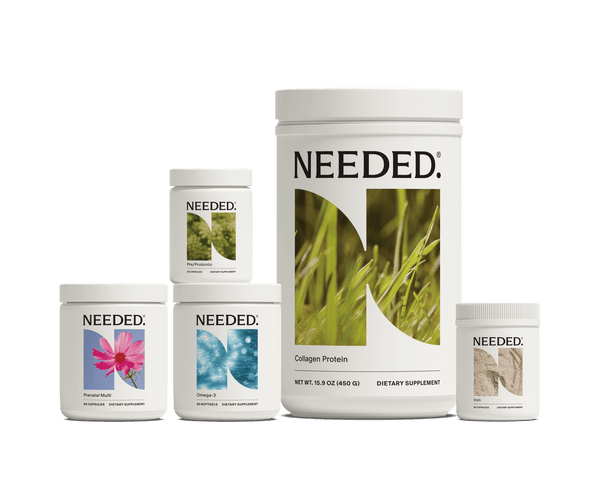
The Needed Postnatal Vitamins Plan pairs a multivitamin with a dedicated omega-3, so you aren't relying on a multi alone for DHA. It includes the Needed Prenatal Multivitamin (3 capsules: 150 mcg iodine as potassium iodide, 200 mg choline, 920 mcg DFE methylfolate and 150 mcg vitamin B12, with no iron so iron can be matched to your labs), Prenatal Omega-3 (500 mg DHA + 500 mg EPA per 2 softgels), and Stress Support. These nutrients support your nutritional needs while breastfeeding.*
To compare individual products, browse Needed's breastfeeding supplements.
When to talk to your healthcare practitioner
- A standard multivitamin plus food covers most breastfeeding women, but some situations call for a personalized plan. Talk to your healthcare practitioner or a registered dietitian if:
- You eat a vegan or mostly plant-based diet, since B12, iron, iodine, choline and DHA all need a plan.
- You've had weight-loss (bariatric) surgery, which changes how you absorb several nutrients.
- You have a history of thyroid issues before adding or changing an iodine supplement.
- You had heavy blood loss at birth or feel unusually tired, so your iron levels can be checked before you add iron.
- You take prescription medications, which can interact with some supplements.
- You're considering any supplement or herb not covered here. Look it up in LactMed first.
Frequently asked questions
What vitamins should I take while breastfeeding?
Most breastfeeding women do well with a prenatal or postnatal multivitamin plus food. Pay closest attention to iodine (290 mcg a day), choline (550 mg), vitamin A (1,300 mcg RAE), vitamin B12 (2.8 mcg) and DHA (at least 200 mg). Iron needs drop to 9 mg a day while your period hasn't returned, and vitamin D stays at 600 IU.
Can I keep taking my prenatal vitamins while breastfeeding?
Yes. A prenatal is a reasonable base while breastfeeding unless your healthcare practitioner advises otherwise. Check that it has about 150 mcg of iodine and some choline, and pair it with a DHA source if it has none. If it's high in iron, ask your healthcare practitioner whether you still need that much.
How much DHA do I need while breastfeeding?
An international perinatal consensus advises breastfeeding women to average at least 200 mg of DHA a day. You can get that from 8 to 12 ounces a week of low-mercury fish such as salmon or sardines, or from a fish-oil or algae-based omega-3 supplement if you rarely eat fish.
How much choline do I need while breastfeeding?
The Adequate Intake for choline while breastfeeding is 550 mg a day, up from 450 mg in pregnancy. Most women fall short: US women average about 278 mg a day from food, and most prenatals contain little choline. One large egg provides about 147 mg, so eggs and a supplement can close the gap.
How much iodine do breastfeeding mothers need?
Breastfeeding mothers need 290 mcg of iodine a day, more than during pregnancy. The American Thyroid Association advises a daily supplement with 150 mcg of iodine as potassium iodide, plus food sources like dairy, eggs, seafood and iodized salt. Avoid iodine or kelp supplements above 500 mcg a day.
Do breastfed babies need vitamin D drops?
Yes, in most cases. Breast milk is naturally low in vitamin D, so the American Academy of Pediatrics recommends 400 IU of vitamin D drops daily for breastfed and partially breastfed babies, starting shortly after birth. Ask your pediatrician which drops to use and whether your situation calls for a different plan.
Do vitamins increase breast milk supply?
No vitamin or supplement is proven to increase breast milk supply. Supply depends mainly on how often and how fully you remove milk through nursing or pumping. Herbal galactagogues such as fenugreek have weak, mixed evidence and can cause side effects. If supply is a concern, see an IBCLC or your healthcare practitioner.
Do I need iron while breastfeeding?
Your iron need falls to 9 mg a day while breastfeeding, as long as your period hasn't returned, compared with 27 mg in pregnancy. Many women get enough from food and a standard multivitamin. Don't keep taking high-dose iron unless a blood test shows you need it.
How long should I take vitamins while breastfeeding?
Most women continue a multivitamin for as long as they breastfeed, because lactation needs for iodine, choline, and several vitamins stay higher the whole time. After weaning, your needs return to non-pregnant levels, so ask your healthcare practitioner whether to switch to a standard women's multivitamin.
Sources
- Maternal Diet and Breastfeeding, Centers for Disease Control and Prevention (updated Aug. 25, 2026)
- Dietary Supplement Fact Sheets, NIH Office of Dietary Supplements
- Choline: Fact Sheet for Health Professionals, NIH Office of Dietary Supplements
- ATA Statement on the Potential Risks of Excess Iodine Ingestion and Exposure, American Thyroid Association
- Koletzko B, et al. The roles of long-chain polyunsaturated fatty acids in pregnancy, lactation and infancy: consensus recommendations. J Perinat Med. 2008;36(1):5–14
- DHA supplementation in lactating women increases breast milk DHA concentrations, Current Developments in Nutrition
- Advice about Eating Fish, U.S. Food and Drug Administration and Environmental Protection Agency
- Vitamin D supplementation in infants (summarizing AAP guidance), American Family Physician
- Fenugreek, Drugs and Lactation Database (LactMed), NIH
-
Drugs and Lactation Database (LactMed), NIH
*These statements have not been evaluated by the Food and Drug Administration. This product is not intended to diagnose, treat, cure or prevent any disease.


